Dennis Wijers Fairfax, Virginia

02.0 / Overview

I lead complex technology programs across space, national security, cloud, and AI.

I began in Air Force nuclear operations before moving into space acquisition, national missions, hyperscale cloud, AI strategy, and commercial satellite connectivity.

02.1 / My path

The experiences behind the work I do today.

I have had the chance to see the mission from several angles: operating a critical system, acquiring space capabilities, connecting national systems to users, and building technology at commercial scale.

I started with the 10th Missile Squadron in Montana as a Minuteman III missile officer. The role demanded discipline, sound judgment, and trust across a small crew responsible for a national-security system. At the Space and Missile Systems Center in El Segundo, I learned defense acquisition from leaders whose standards and judgment still shape how I work.

National missions

At the NRO, I worked with exquisite systems and saw how collection, processing, dissemination, and operational use connect across the Department of Defense and Intelligence Community. I led the work to operationalize Real-Time Transfer Service across the OPIR enterprise, turning a planned capability into a secure, reliable service that national-security users could depend on.

Into industry

That experience led me to Microsoft and Amazon, where I have worked across hyperscale cloud, secure platforms, AI, and now the operational systems behind Amazon Leo broadband connectivity for government, defense, industry, and customers around the world.
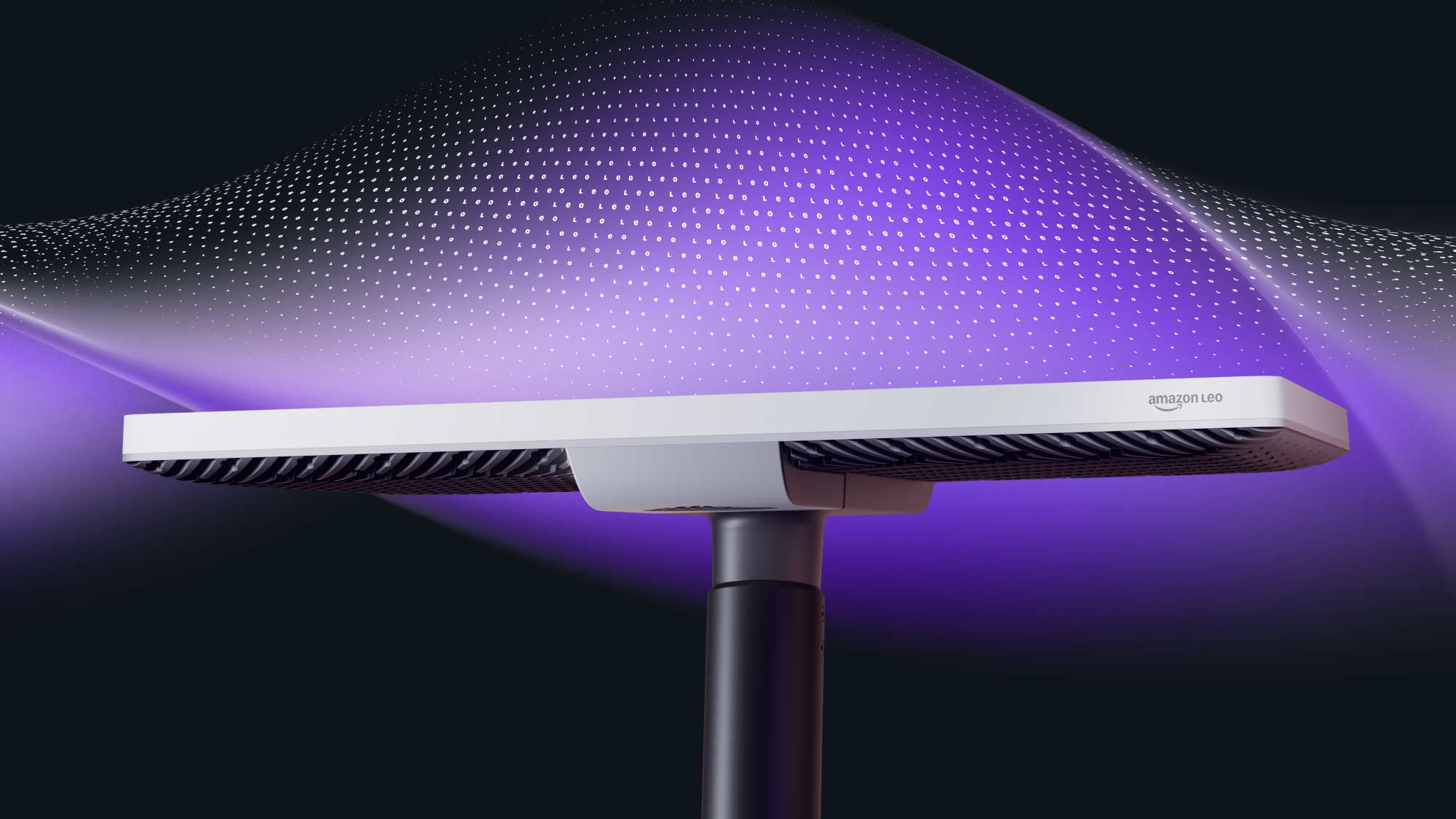
Amazon Leo Ultra enterprise satellite antenna

02.2 / Current chapter

Amazon Leo Government

Amazon Leo brings much of that experience together: space systems, secure cloud, data movement, and operations at global scale. My work focuses on the government field-operations side, designing the support-platform architecture, connecting systems and identity layers, and leading engineering teams through a complex operational build.

The opportunity is larger than connectivity alone. Satellite networks, cloud infrastructure, secure data movement, and field support have to function as one service for demanding public-sector customers.

Program imagery and public context are from Amazon’s November 2025 enterprise announcement. Personal responsibilities are based on my resume and do not represent an official Amazon statement. Amazon source ↗

02.3 / Selected work

How those experiences show up in the work.

Four examples trace the responsibilities I have carried from mission operations through government programs and commercial technology.

Operations2010 to 2014

I began my career as a Minuteman III missile officer.

The roleAs a Minuteman III crew commander and assistant flight commander, I was responsible for readiness, exact execution, and accountable decisions in a nuclear command-and-control mission.

Leadership foundationI still bring that operating discipline to complex programs: understand the full system, identify risk early, make clear decisions, and maintain focus on operational readiness.

Mission systems2014 to 2017

I then led programs in nuclear detection and GPS acquisition.

Nuclear detectionI led a $20M-per-year ground-system program supporting the United States Nuclear Detonation Detection System across nine global sites. The mission joins space-based sensing with ground processing and the specialized expertise of Sandia and Los Alamos.

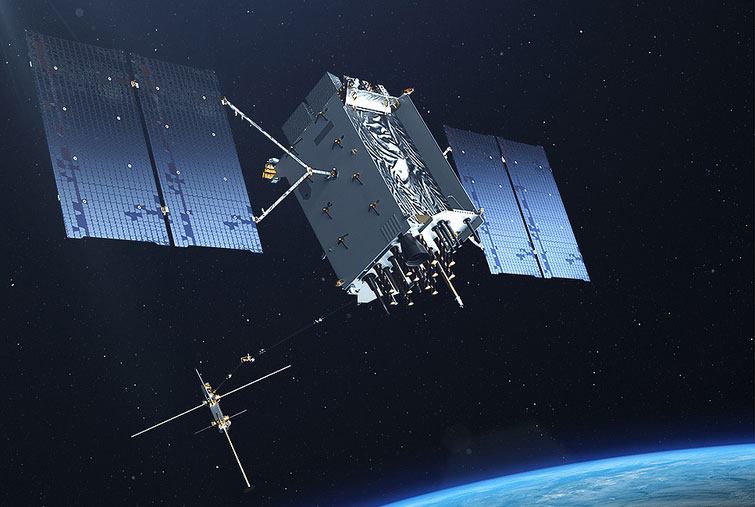
GPS acquisitionOn the GPS Program Executive Officer staff, I supported governance of a $32B portfolio. The work turned funding, schedule, cybersecurity, and technical risk into decisions that could sustain positioning, navigation, and timing capabilities for military and civil users.

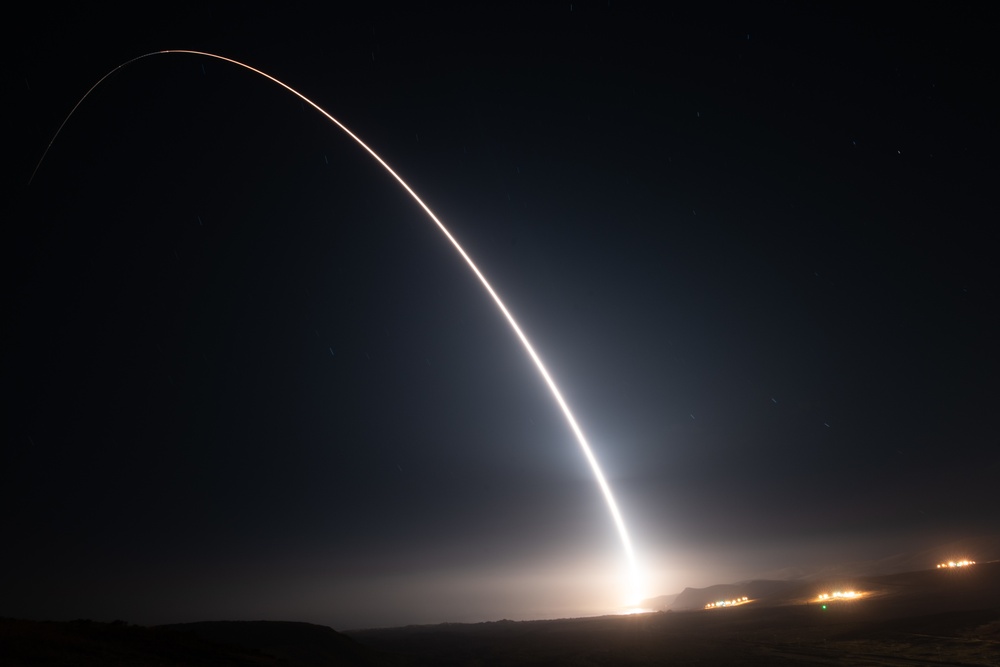
Nighttime trajectory of an unarmed Minuteman III test launch
Unarmed Minuteman III operational test launch, Vandenberg Space Force Base, 2021. U.S. Space Force photo by Michael Peterson. Source
GPS III satellite in orbit above Earth
GPS III satellite in orbit. U.S. Air Force courtesy graphic. Source
RTS and OPIR2017 to 2021

I led the team that made Real-Time Transfer Service operational across the OPIR enterprise.

Why RTS matteredBefore I arrived at the NRO, the 2015 DoD Space Science and Technology Strategy placed RTS in its roadmap for an open-architecture missile-warning ground system and separately set a goal of real-time dissemination from national assets to tactical units. A 2026 GAO report describes RTS as the service that lets OPIR weapon systems publish data in standard message formats that users access by subscription.

My contributionI led the 55-person technical organization spanning software development, systems engineering, cybersecurity, mission operations, and program management that built, secured, operated, and sustained a $50M+ real-time satellite-data portfolio supporting more than 80 DoD and Intelligence Community programs. We integrated 15 non-traditional feeds, increased mission data available to users by 38%, expanded access to 15 additional organizations, and improved availability from 99% to 99.99%.

Delivery and expansionI also delivered a $10M cross-domain dissemination platform that doubled global customer access, then secured and executed a $26M follow-on to establish the mission's first cloud-enabled secure dissemination capability.

Commercial technology2021 to present

My work at Microsoft and Amazon has covered secure cloud, AI, emerging technology, and satellite operations.

MicrosoftI worked first on secure cloud operations, helping services reach government authorization and building repeatable mechanisms for planning, prioritization, and accountability. Later, in Strategic Ventures, I created a due-diligence and scoring model used to assess 20 emerging-technology opportunities and supported strategic research across AI and quantum.

AmazonAt AWS, I helped scale just-in-time privileged access across 14 cloud programs and operational capabilities, together spanning more than 200 services. Today, at Amazon Leo Government, I am applying the same systems view to support architecture, integration, identity, and field operations for a new satellite network.

02.4 / Direction

What I want to do next.

I am pursuing director or executive leadership roles where I can launch new technology efforts and own the path from strategy through operational adoption.

Launch and scale new programs

Define the strategy, build the operating structure, establish priorities, and deliver usable capability.

Lead across organizations

Align engineers, operators, security teams, business leaders, and government customers around decisions and execution.

Work on consequential technology

Focus on space, AI, secure infrastructure, resilient connectivity, and other fields where reliability and public value matter.

02.5 / Organizations

02.6 / Career timeline

From the Air Force to commercial technology.

2025 to present

Amazon

Senior Technical Program Manager

Amazon Leo Government · AWS Foundational Security

2021 to 2025

Microsoft

Director, Strategic Ventures · Senior Product Manager, Microsoft 365

Emerging technology strategy · Sovereign cloud delivery

2020 to 2021

SAIC

System Engineer Principal

Overhead Persistent Infrared architecture

2010 to 2020

U.S. Air Force

Program Manager · Acquisition Leader · Missile Officer

NRO · GPS · Nuclear detection · Global Strike Command